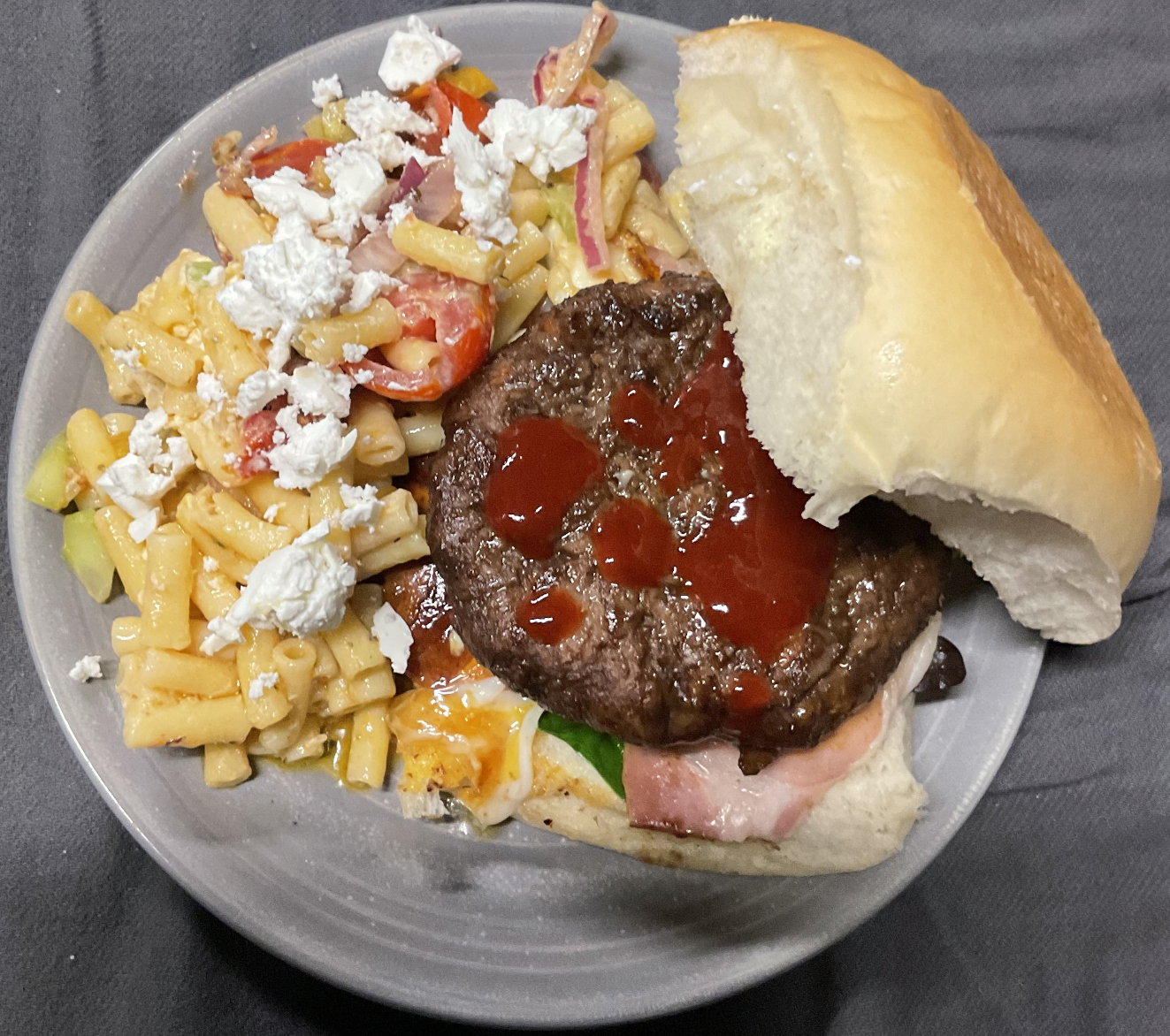
Meal planning for a large family sounds complicated on paper.
In practice, it doesn’t need to be.
With six people in the house – four growing children and two adults – the real challenge isn’t cooking. It’s managing the constant flow of meals, groceries, leftovers, and changing appetites.
Over time we discovered that strict meal plans don’t work very well for us.
Life changes too quickly.
Instead, we use a loose fortnightly meal structure supported by a single main grocery shop and small replenishment trips during the week.
The system is simple enough to survive busy weeks, but structured enough that dinner never becomes a daily crisis.
Why We Plan Over a Fortnight
Most meal planning advice suggests weekly plans.
For our household, planning over a two-week period works better.
A fortnight gives enough space for:
- repeating a few reliable meals
- introducing some variety
- adapting to changing schedules
It also aligns with how we do groceries.
We typically do one major grocery shop every two weeks, which provides the base ingredients for most meals during that period.
Between those shops we may pick up smaller items like:
- fresh fruit
- milk
- bread
- vegetables
But the core of the meal plan already exists.
This reduces the number of large shopping trips and keeps the kitchen stocked with predictable ingredients.
The System Is Structured, Not Scheduled
We don’t assign specific meals to specific days.
Instead, we maintain a small pool of reliable meals that we rotate through.
For example, a typical fortnight might include:
- a couple of anchor meals
- one or two lighter meals
- a leftover night
- something experimental
- simple fallback meals
Because the meals are interchangeable, we can choose what to cook based on:
- how busy the day has been
- what ingredients need using
- what the kids feel like eating
This flexibility prevents the meal plan from becoming another rigid schedule.
Anchor Meals Make Large Families Easier to Feed
Every household benefits from a few anchor meals.
Anchor meals are recipes that are:
- easy to prepare
- widely accepted by everyone
- scalable for larger portions
In our house, meals like The Bread Thing or a Mediterranean Pasta Salad often fill this role.
They work well because they:
- feed multiple people easily
- adapt to ingredient variations
- produce leftovers for the next day
Anchor meals reduce the pressure to invent new dinners constantly.
They provide stability within the meal system.
Leftovers Are Part of the Plan
One of the most important parts of feeding a large family efficiently is accepting that leftovers are not accidents – they are part of the system.
When cooking larger meals, we intentionally aim to produce enough for:
- next-day lunches
- an easy dinner later in the week
This reduces cooking workload and helps stabilise food spending.
Leftovers also make school lunches easier to manage, since prepared food can often be repurposed the next day.
Without this approach, cooking for a large household would require significantly more effort.
Ingredient Systems Reduce Grocery Stress
Instead of planning every single ingredient for every meal, we maintain a base ingredient system.
Certain items are almost always in the house:
- pasta
- rice
- bread
- cheese
- eggs
- frozen vegetables
- sauces
- pantry staples
These ingredients support multiple different meals.
If plans change unexpectedly, we can still cook something reasonable without another grocery run.
This approach also keeps grocery spending more predictable, something we discussed more directly when looking at the cost of feeding a family of six in Australia.
Flexibility Matters More Than Precision
Strict meal plans often fail because they assume every week will follow the same pattern.
In reality:
- schedules change
- children have activities
- energy levels vary
A flexible meal structure adapts to these changes.
For example, if a busy day leaves little time for cooking, we can choose a faster meal from the list rather than abandoning the plan entirely.
This adaptability keeps the system practical.
The Role of the Main Grocery Shop
Our fortnightly grocery shop provides the foundation for the meal system.
During that shop we focus on:
- staple ingredients
- meat or protein options
- vegetables that last well
- pantry replenishment
This large shop ensures the kitchen is well stocked.
During the following two weeks we only need smaller replenishment trips for items that spoil quickly.
Because the major ingredients are already available, daily meal decisions become easier.
Small Systems Reduce Kitchen Stress
The real benefit of meal planning isn’t just food.
It’s reduced decision fatigue.
When the kitchen operates on predictable structures:
- fewer last-minute grocery runs happen
- dinner decisions become easier
- leftovers are used effectively
- grocery spending becomes more stable
Meal systems quietly support other household systems as well.
Lunch packing becomes easier.
Weekly resets involve less food waste.
Kitchen routines become smoother.
These small improvements accumulate over time.
The System Evolves Naturally
No meal system remains static forever.
As children grow and preferences change, meals adjust as well.
Sometimes a recipe disappears from the rotation.
Sometimes a new one becomes an anchor meal.
Because the system is flexible, these changes happen naturally rather than requiring a full redesign.
The goal is not perfection.
The goal is reliability.
Final Thought
Feeding a large family will always require effort.
But it doesn’t have to require constant improvisation.
A simple meal structure – supported by a fortnightly grocery rhythm, repeatable meals, and intentional leftovers – can make a busy household kitchen far easier to manage.
Over time, these small systems remove a surprising amount of daily friction.
And in family life, reducing friction often matters more than finding the perfect recipe.