Posted on Leave a comment

Building Low-Friction Kitchen Systems for a Large Family

Feeding a large family every day is less about cooking skill and more about structure.

In a household of six, the kitchen becomes one of the most active systems in the house. Meals happen multiple times a day. Groceries move quickly. Small inefficiencies multiply fast.

Without structure, the kitchen becomes reactive:

What’s for dinner tonight?
Do we have the ingredients?
Who ate the leftovers?
Why are we out of milk again?

None of these problems are dramatic on their own.

But repeated every day, they create friction.

That’s why we began developing simple kitchen systems for a large family – not to optimise food, but to reduce daily decision pressure.

Why Kitchens Become Stress Points

Most household kitchens operate on improvisation.

Someone opens the fridge and decides what to cook. Grocery shopping happens when something runs out. Meals change depending on mood or time.

Improvisation works occasionally.

But when feeding multiple people every day, improvisation creates unpredictability.

Unpredictability leads to:

  • last-minute grocery runs
  • repeated decision fatigue
  • inconsistent meal timing
  • food waste

A kitchen system doesn’t eliminate flexibility.

It simply adds structure underneath it.

The Goal: Reduce Repeated Decisions

The first principle behind kitchen systems for a large family is simple:

Reduce repeated decisions.

Many food decisions happen every day:

  • lunch packing
  • dinner planning
  • snack availability
  • grocery replenishment

Instead of solving each decision individually, we built repeatable patterns.

These patterns absorb the daily friction.

Anchor Meals Make Everything Easier

One of the most useful kitchen systems is identifying anchor meals.

Anchor meals are:

  • repeatable
  • scalable
  • easy to prepare
  • widely accepted by the household

They are not special meals.

They are dependable ones.

For us, meals like The Bread Thing and our Mediterranean Pasta Salad function as anchors because they:

  • feed multiple people easily
  • adapt to ingredient variations
  • produce leftovers when needed

Anchor meals reduce the pressure of constantly inventing new dinners.

Structure Without a Rigid Meal Plan

We don’t follow a strict weekly meal plan.

Instead, we use a loose structure.

Typical rhythm:

  • 2–3 anchor meals per week
  • 1 flexible leftover night
  • 1 quick meal option
  • 1 experimental or seasonal meal

This structure creates predictability without locking us into a rigid schedule.

Flexibility still exists.

But the framework absorbs most decision-making.

Ingredient Systems Reduce Shopping Stress

Another important kitchen system is ingredient standardisation.

Certain items are always stocked:

  • pasta
  • rice
  • frozen vegetables
  • cheese
  • bread
  • eggs
  • basic sauces

These ingredients support multiple meals.

If a dinner plan fails unexpectedly, fallback meals are still possible.

This reduces panic buying and mid-week grocery runs.

It also stabilises grocery spending, something we discuss more deeply in our breakdown of the cost to feed a family of six in Australia.

Prep Rhythms Matter More Than Recipes

Many kitchen frustrations don’t come from recipes.

They come from timing.

For example:

  • vegetables being prepared while the pan is already heating
  • searching for ingredients mid-cooking
  • discovering missing items too late

We found that small preparation rhythms remove these problems.

Examples include:

  • chopping vegetables early in the cooking process
  • measuring ingredients before heat starts
  • organising preparation zones on the bench

These habits are simple.

But repeated daily, they create smoother cooking.

Batch Thinking Reduces Workload

Another useful principle is batch thinking.

When certain ingredients are already being prepared, making extra saves effort later.

Examples:

  • cooking extra pasta for next-day lunches
  • preparing additional rice for another meal
  • roasting larger trays of vegetables

Batch thinking doesn’t require full meal prepping.

It simply recognises that cooking once can support multiple meals.

Fridge Visibility Reduces Waste

One surprising lesson from building kitchen systems was the importance of visibility.

When ingredients are hidden behind others, they tend to be forgotten.

Forgotten food becomes waste.

We now try to keep the fridge organised so that:

  • leftovers are visible
  • produce is easy to see
  • older items move forward

This small habit dramatically reduced wasted ingredients.

Waste reduction is one of the easiest ways to lower food costs without changing what you eat.

The Role of Seasonal Awareness

Seasonal timing also influences kitchen systems.

Certain foods are naturally cheaper and more abundant at specific times of year.

Adjusting meals to seasonal availability can reduce grocery cost and improve quality.

This idea connects closely to our broader reflections on seasonal food planning in Australia and how climate timing influences food cost.

When the kitchen system aligns with seasonal supply, grocery stress decreases.

Kitchen Systems Are Family Systems

Kitchen systems are not isolated.

They interact with other systems in the household.

For example:

  • meal predictability supports weekly planning
  • grocery consistency supports financial tracking
  • leftovers support lunch systems

When systems reinforce each other, daily friction decreases.

This is the same principle behind building simple systems for family life more broadly.

The kitchen simply happens to be one of the busiest areas where those systems operate.

The System Doesn’t Need to Be Perfect

One important lesson we’ve learned is that kitchen systems don’t need to be perfectly organised.

They simply need to be reliable enough.

Even imperfect structure reduces stress compared to constant improvisation.

If a system works most of the time, it is valuable.

Small improvements accumulate.

The Long-Term Effect

After building kitchen systems gradually, several changes became noticeable:

  • fewer last-minute grocery trips
  • less food waste
  • smoother dinner preparation
  • less debate about meals
  • more predictable grocery spending

None of these changes happened overnight.

They emerged slowly as small structures were layered over time.

Final Thought

Feeding a large family will always require effort.

But effort doesn’t have to mean chaos.

Kitchen systems don’t remove cooking.

They remove friction around cooking.

When meals follow simple structures, the kitchen becomes calmer.

And when the kitchen is calmer, the entire household benefits.

Posted on Leave a comment

How Seasonal Timing Impacts Food Cost in Australia

Food cost isn’t just about supermarket prices.

It’s about timing.

In Australia – particularly in warmer regions – seasonal timing has a direct impact on how much food costs, how much gets wasted, and how much pressure ends up on the weekly grocery bill.

We didn’t realise how interconnected this was until we began tracking planting cycles more deliberately while building our moon planting framework for the Southern Hemisphere.

What started as a gardening experiment slowly became a lesson in seasonal food planning in Australia.

The Hidden Link Between Timing and Cost

When planting is mistimed, two things happen:

Yields drop.

Grocery reliance increases.

If seedlings are planted too late into heat, growth suffers.
If harvest windows are misjudged, produce spoils faster.
If seasonal transitions are assumed rather than observed, planting fails.

Every failed crop quietly shifts food cost back to the supermarket.

That isn’t dramatic.

It’s incremental.

But incremental costs compound.

Why Northern Hemisphere Advice Creates Cost Drift

Much gardening advice online assumes Northern Hemisphere conditions.

Spring in March.
Autumn in September.
Mild summers.

In Queensland, extended heat and humidity create different pressures.

Following imported planting calendars without adjustment can mean:

Seeds sown too late into rising temperatures

Greens bolting early

Soil moisture evaporating faster than expected

We discussed this more fully in our post on Building a Moon Planting System for the Southern Hemisphere, where documentation replaced assumption.

Seasonal alignment is not aesthetic.

It is economic.

How Mistimed Planting Increases Grocery Bills

Consider a simple example.

If leafy greens fail during a heat spike, those greens get purchased instead.

If tomatoes split from irregular rainfall, replacements are bought.

If herbs bolt early, flavour gets outsourced to packaged alternatives.

None of these purchases feel large.

But they accumulate weekly.

Tracking seasonal cycles revealed that better timing reduced replacement buying.

Not eliminated it – but reduced it.

Seasonal Planning as a Cost Buffer

We’ve learned to treat seasonal awareness as a buffer.

Instead of rigid dates, we now think in:

Temperature ranges

Rain patterns

Soil behaviour

Daylight shifts

Planting windows become ranges, not fixed calendar entries.

This reduces:

Failed sowing

Mid-season replanting

Waste

Panic buying

Seasonal food planning in Australia requires adaptability more than precision.

Grocery Cost Fluctuation and Local Climate

Even if you don’t grow food, seasonal timing still matters.

In Australia:

Berry prices spike out of season

Leafy greens increase during heatwaves

Tomatoes fluctuate dramatically

Citrus becomes abundant in winter

Buying seasonally reduces cost naturally.

Buying reactively increases it.

When we broke down our weekly grocery range in Cost to Feed a Family of Six in Australia, seasonal fluctuation was one of the biggest variables.

It isn’t just inflation.

It’s alignment.

Waste Is a Seasonal Cost Multiplier

Seasonal mistiming increases waste in two ways:

Garden waste from failed crops.

Fridge waste from overbuying out-of-season produce.

Out-of-season produce often:

spoils faster

tastes weaker

costs more

When buying aligns with seasonal abundance, spoilage reduces.

Reduced spoilage lowers effective cost per meal.

Waste is invisible expense.

Heat as the Dominant Variable

In warmer Australian climates, heat is often more influential than calendar month.

Extended heatwaves:

accelerate spoilage

stress plants

reduce yield

increase water usage

Tracking heat patterns helped us adjust planting windows.

It also changed our shopping rhythm.

If a heatwave is forecast, we reduce perishable buying slightly.

Small adjustments prevent loss.

Documentation Changes Behaviour

Without tracking, it’s easy to blame:

“Bad seeds”

“Poor soil”

“Unlucky timing”

With documentation, patterns become visible.

We began recording:

When seeds were planted

Average temperatures

Rainfall events

Harvest timing

Replacement purchases

That connection between planting date and grocery receipt was revealing.

Seasonal food planning in Australia benefits from observation more than opinion.

Seasonal Thinking Extends Beyond Gardening

This isn’t just about growing food.

It’s about planning with climate awareness.

Examples:

Choosing slow-cooked meals during cooler weeks

Lighter, lower-heat cooking during peak summer

Buying fruit when abundant rather than when advertised

Food systems are climate systems.

When we talk about building simple systems for family life, seasonal awareness is part of that structure.

Climate influences cost.

Cost influences pressure.

Pressure influences stress.

Systems reduce that chain reaction.

How This Reduces Weekly Friction

Seasonal alignment reduces:

Mid-week grocery runs

Unexpected substitutions

Impulse buying

Frustration over spoiled produce

When food planning aligns with seasonal cycles, decisions simplify.

Simplified decisions reduce friction.

This mirrors what we describe in our Family Systems FAQ – structure absorbs stress before it escalates.

Seasonal awareness becomes another stabilising layer.

The Limits of Control

Seasonal timing doesn’t eliminate cost fluctuation.

Storms happen.
Heat spikes arrive.
Prices move.

The goal isn’t perfect prediction.

It’s reduced volatility.

Better timing lowers average cost over time.

And lower average cost matters more than chasing occasional bargains.

The Broader Lesson

Tracking seasonal cycles taught us something broader:

Alignment reduces replacement.

Whether it’s:

Planting timing

Grocery buying

Income experiments

Platform dependence

Misalignment increases cost.

Alignment stabilises outcomes.

This principle extends into our approach to real-world experiments as a family – observe first, adjust gradually, document honestly.

Seasonal planning is simply another domain where structure improves clarity.

Final Thought

Seasonal food planning in Australia is less about strict calendars and more about environmental awareness.

Heat matters.
Rain matters.
Local cycles matter.

When timing improves, waste decreases.
When waste decreases, cost stabilises.
When cost stabilises, stress reduces.

Small seasonal adjustments quietly compound into meaningful savings.

And like most systems in family life, the benefit isn’t dramatic.

It’s steady.

Posted on Leave a comment

Mediterranean Pasta Salad: A Low-Heat Family Side Dish That Scales Easily

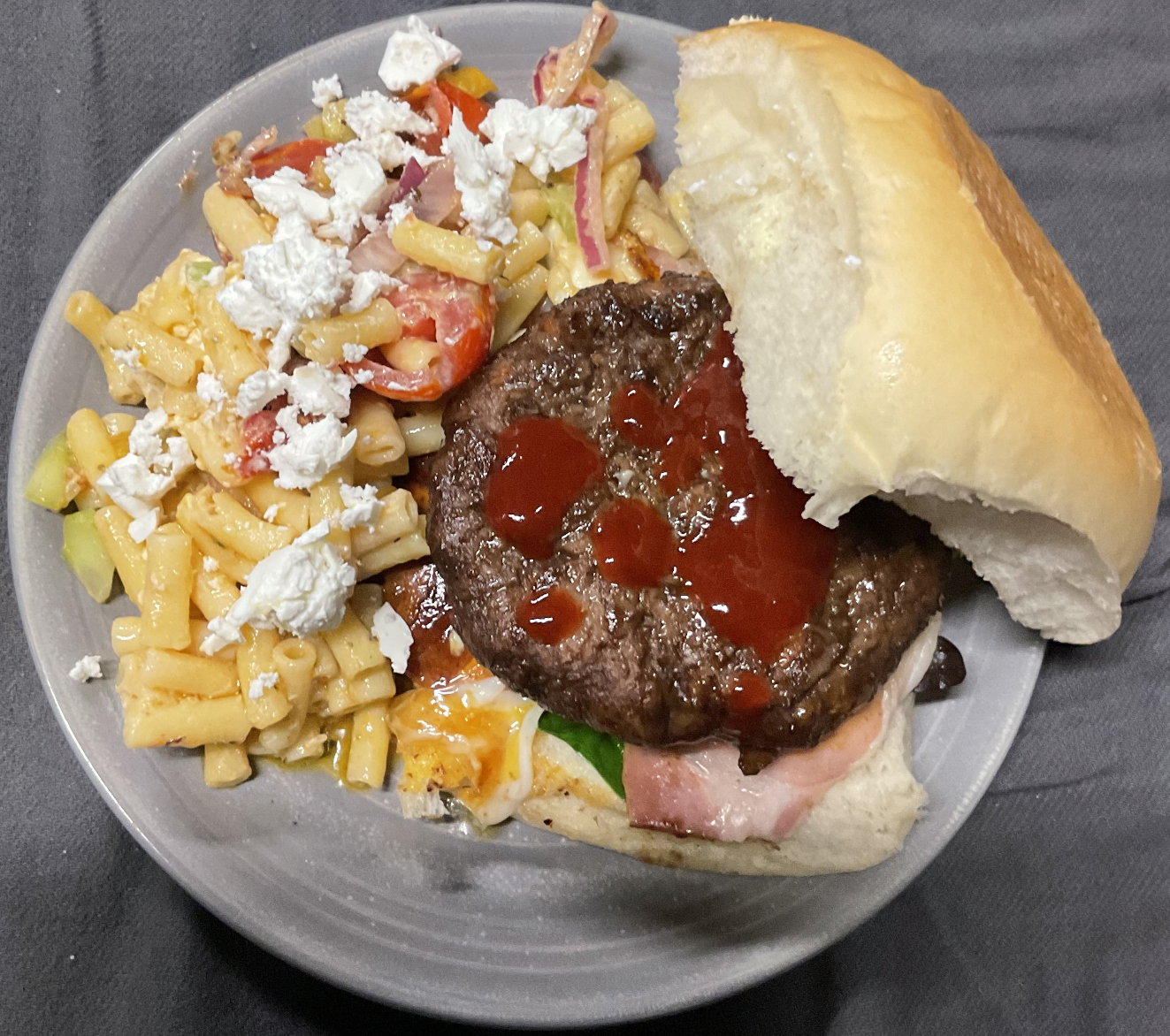
jaysndees Pasta salad dish with burger.

When the temperature climbs, the idea of standing over a hotplate or BBQ loses its appeal quickly.

In those stretches of warm days and warm nights, we lean on meals that require minimal heat but still feel substantial.

This Mediterranean pasta salad became one of those fallback options.

It started as a refreshing side dish for BBQs and family lunches. Over time, it proved something more useful:

It scales easily.
It keeps for a couple of days.
And it survives repetition.

That’s usually the sign of a keeper.


What This Salad Actually Is

At its core, this is a simple combination of:

  • Pasta (fusilli, penne, farfalle, or macaroni)
  • Fresh vegetables
  • Feta
  • A tangy olive oil dressing
  • Optional additions (olives, roasted capsicum, chilli)

It’s colourful without being complicated.

It works as:

  • a BBQ side
  • a family lunch addition
  • a light dinner companion
  • something to bring to a picnic

And it doesn’t demand constant attention once made.


Why It Works in a Family Setting

Side dishes are often overlooked in family meals.

They’re either:

  • too bland,
  • too heavy,
  • or too short-lived in the fridge.

This one balances a few important things:

  • Soft (pasta, feta)
  • Crunch (cucumber, onion)
  • Tang (vinegar, lemon)
  • Freshness (basil)
  • Colour (tomato, capsicum)

That blend makes it interesting without being overwhelming.

It’s also fairly easy to prepare in one session and serve across multiple meals.

That’s what makes it practical.


The Structure Behind It

This isn’t a complicated build.

1. Cook and Cool the Pasta

Boil until al dente.
Rinse under cold water.
Let it cool properly before mixing.

Cooling is important – it prevents the dressing from being absorbed unevenly.


2. Prepare the Vegetables

The standard build includes:

  • Cherry tomatoes (halved)
  • Continental cucumber (diced)
  • Red onion (thinly sliced)
  • Semi sun-dried tomatoes
  • Danish feta
  • Fresh basil

Optional:

  • Kalamata olives (we leave these out initially – most of the household isn’t a fan)
  • Dry-fried red capsicum
  • Fresh sliced chilli

Everything is chopped and ready before assembly.


3. The Dressing

A simple mixture of:

  • Extra-virgin olive oil
  • Red wine vinegar
  • Lemon juice
  • Dijon mustard
  • Garlic
  • Oregano
  • Salt and pepper

Whisked until combined.

No complexity required.


4. Combine and Chill

Mix pasta, vegetables, feta, and basil in a large bowl.

Add dressing and toss until evenly coated.

Then let it sit in the fridge for at least 30 minutes.

This resting period matters – the flavours settle and blend properly.


Why It Keeps Well

Unlike leafy salads that wilt quickly, this one holds its structure.

The pasta absorbs flavour gradually.
The vegetables stay crisp.
The feta softens slightly without disappearing.

It comfortably lasts a couple of days refrigerated, which makes it useful for:

  • leftovers
  • next-day lunches
  • adding to another meal without extra cooking

Variations That Fit the System

Because the structure is stable, small variations don’t break it.

  • Add olives individually when serving (for those who want them).
  • Add fresh chilli for heat.
  • Dry fry capsicum for depth.
  • Use thinly sliced “Onyaks” (our unformed garlic bulbs) for a sharper punch of flavour.

The base doesn’t change.

Only the accents do.


Where It Fits in Our Rotation

This isn’t an everyday dish in our house.

It’s more of a:

  • warm-weather fallback
  • BBQ companion
  • weekend lunch side
  • something to prepare when you want food ready without constant reheating

That said, it could easily shift into a weekly or fortnightly rhythm.

It has the right balance for that.


The System Principle

Meals don’t have to be complex to be useful.

This pasta salad works because it:

  • requires minimal heat
  • scales easily
  • stores well
  • tolerates personal preference adjustments

That combination makes it more than just “a good salad.”

It makes it a low-friction addition to the family food system.

And in a busy household, low-friction matters.